
Warehouses and distribution centers are the backbone of modern supply chains. Every day, thousands of workers operate heavy machinery, handle large loads, and navigate busy aisles — all under tight deadlines.
The Most Common Hazards in Warehouses and Distribution Centers
Understanding the risks is the first step toward eliminating them. Here are the most frequent hazards found in warehouses and distribution environments:
- Forklift and powered industrial truck accidents — Forklifts are involved in nearly 85 fatal accidents and 34,900 serious injuries every year in the U.S. alone.
- Slips, trips, and falls — Wet floors, cluttered aisles, and uneven surfaces are leading causes of worker injuries.
- Fire and chemical hazards — Many warehouses store flammable materials or hazardous substances that require strict handling protocols.
- Poor lighting and visibility — Dim or inadequate lighting contributes to accidents, especially in high-traffic areas.
Building a Culture of Safety — Not Just Compliance
The most important shift any warehouse or distribution center can make is moving from a compliance-based approach to a culture-based one. When every team member — from the warehouse floor to the executive suite — genuinely values safety, incidents decrease dramatically.
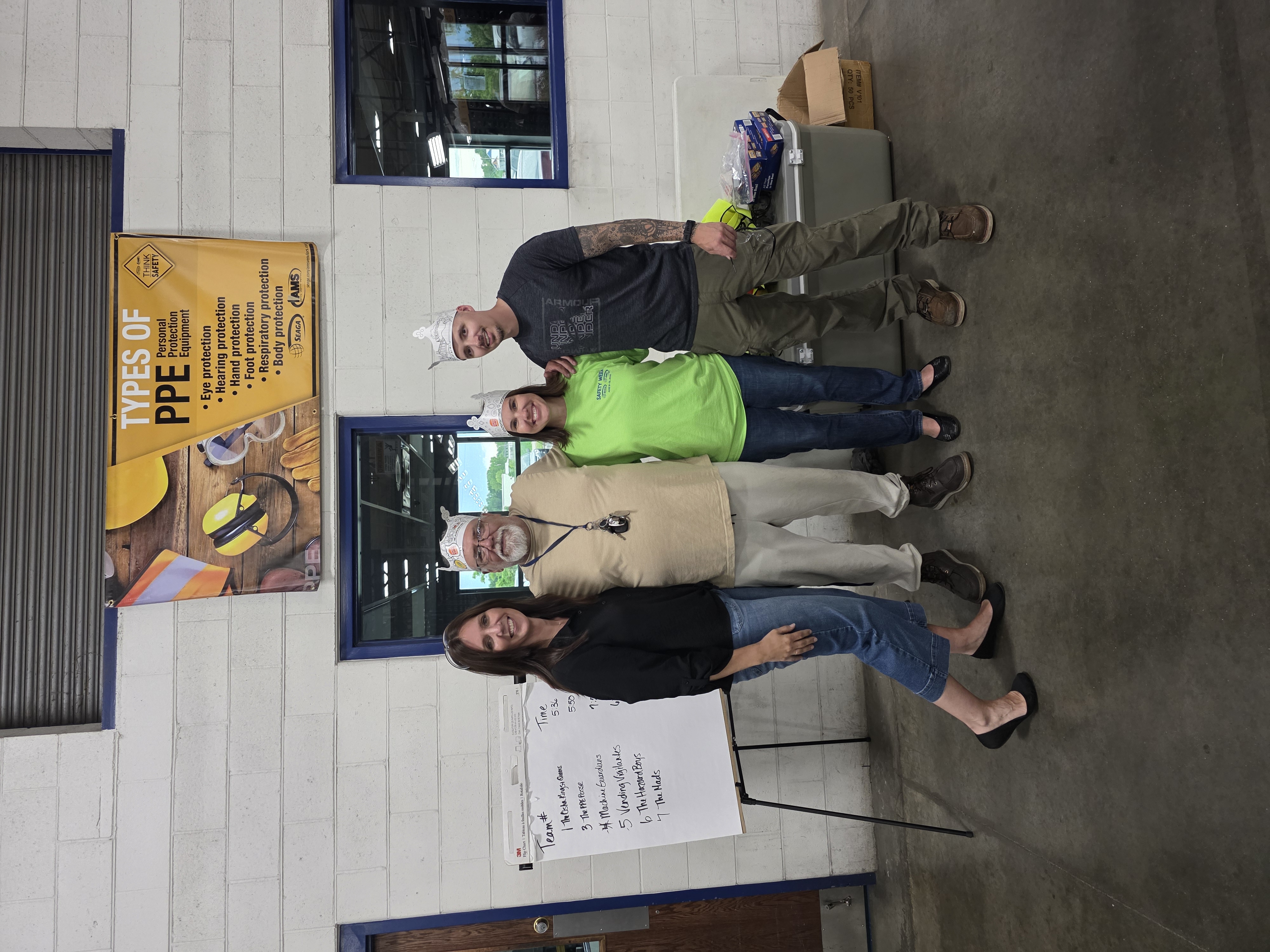
On June 8th – 12th, we here at the Seaga Manufacturing, Freeport location, had our Annual Safety Week. Our safety committee implemented safety puzzles, crosswords and what we called a “relay race”. 6 teams, 4 people, each person had to put Personal Protective Equipment items (PPE) on and off their bodies as fast as they could. The OSHA Kings and Queens pictured below earned the trophy with a time of 5:32!

Leaders set the tone. When managers consistently model safe behaviors, recognize safe practices, and treat safety as a shared value rather than a checkbox, workers follow suit. Case in point, our very own CEO, Mike Freund was the grill master for the end of the annual safety week’s cookout.
Key Safety Strategies Every Warehouse Should Implement
Building a safer warehouse doesn’t happen overnight, but implementing these core strategies will make an immediate difference:
- Enforce proper use of Personal Protective Equipment (PPE) — Hard hats, high-visibility vests, steel-toed boots, and gloves should be non-negotiable.
- Conduct regular safety audits and inspections — Identify and address hazards before they lead to incidents.
- Invest in ongoing safety training — All employees, from new hires to veterans, should receive regular, role-specific safety education.
- Establish clear traffic management plans — Clearly marked pedestrian lanes and forklift zones significantly reduce collision risks.
Final Thoughts
Warehouse and distribution center safety is not optional — it is foundational. By identifying hazards, implementing proven strategies, leveraging technology, and fostering a true safety culture, you can build an operation where every worker goes home safely at the end of every shift.